- Creator Match
- Posts
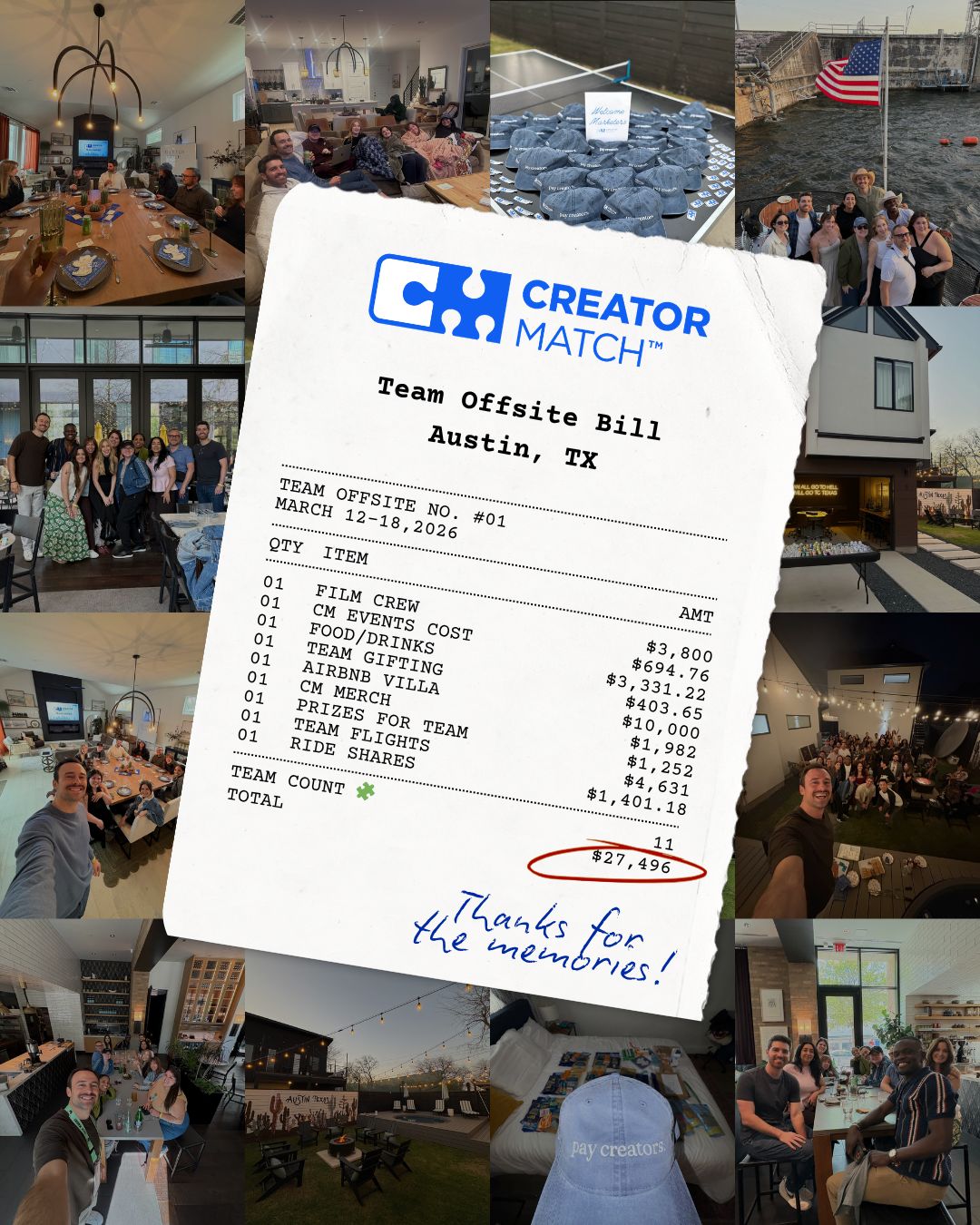
- we spent $27,496 on our first team offsite... was it worth it?
we spent $27,496 on our first team offsite... was it worth it?
Less than 2 years ago, this "team" was me and an AI note-taker. Today? We're 30+ people. We run creator programs for tech brands like Anthropic, Notion, Zapier, Gusto, and more. And for the first time in company history, we got everyone in the same room.

AJ Eckstein
March 27, 2026
Less than 2 years ago, this "team" was me and an AI note-taker.
Today? We're 30+ people. We run creator programs for tech brands like Anthropic, Notion, Zapier, Gusto, and more. And for the first time in company history, we got everyone in the same room.
But here's what I kept asking myself in the months leading up to it:
How do you make an offsite that actually matters?
Not the kind where people fly in, eat nice food, sleep through workshops, and fly home unchanged. The kind that cracks something open. That makes a remote team feel like a real team.
We didn't find a playbook for that. So we wrote one…
We scrapped the corporate offsite. Instead, we treated our team like creators, and ran the whole thing like a brand trip.
First, We Killed the Corporate Offsite
Most offsites are optimized for the wrong thing.
They're optimized for convenience.
We asked a different question: What experience do we want to create?
Then worked backwards from the answer.
That one shift changed every decision we made.
Why Austin. Why SXSW. Why Now.
We didn't pick Austin randomly.
We stacked the offsite on top of SXSW, one of the best creator economy conferences. Because flying 11 people somewhere just for an internal retreat felt like leaving money on the table.
SXSW gave us three things a blank conference room never could:
Real-world exposure to the best ideas in marketing right now
Face time with our partners (brands and creators)
A pressure cooker to test our thinking in real time
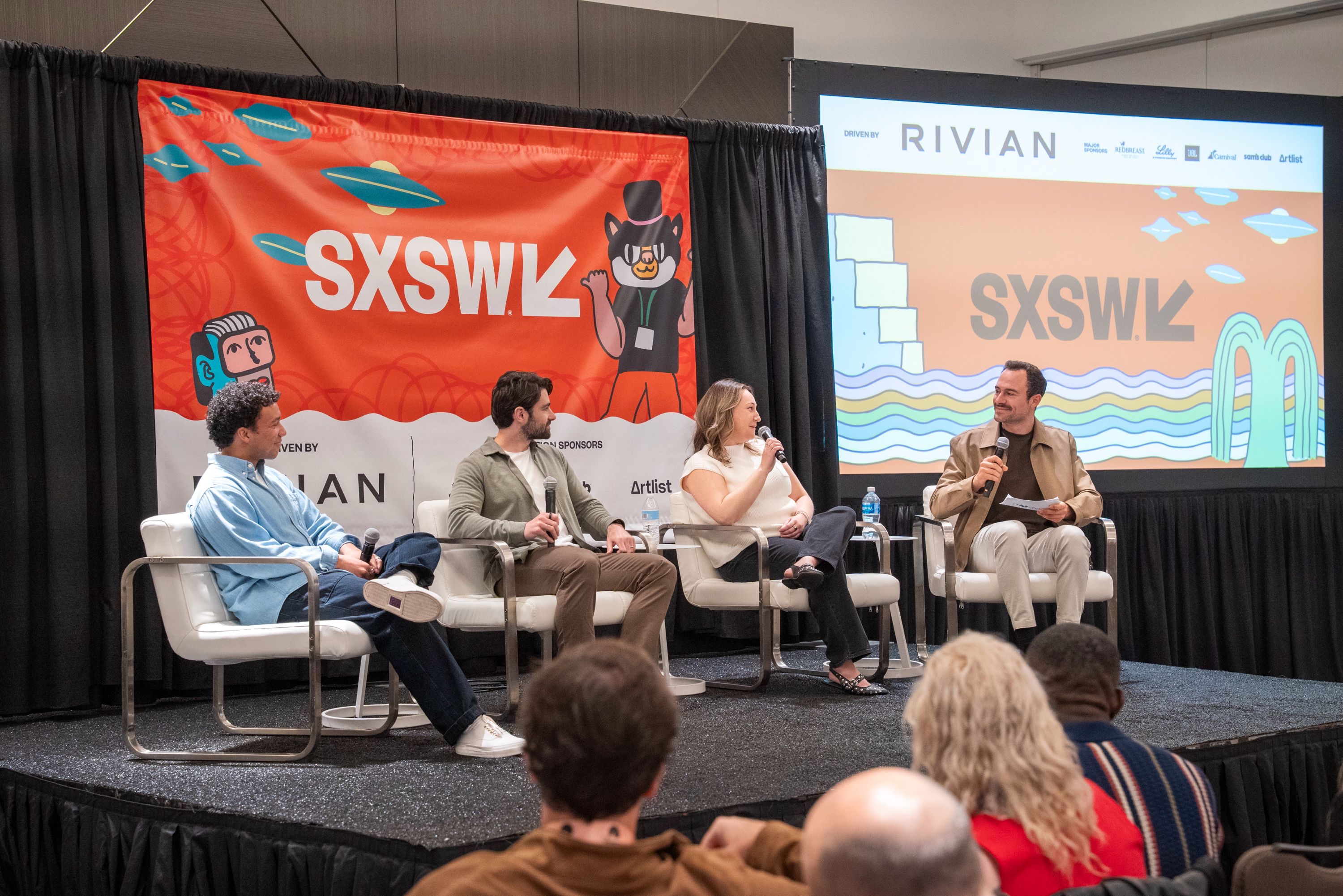
We attended events. We hosted socials. We spoke at 3 sessions. We met people.
Then we went back to the house, and applied everything immediately.
That's not an offsite. That's a force multiplier.
The Villa vs. Hotel Decision
We debated this for weeks.
Hotel: easier logistics, more privacy, predictable Villa: harder coordination, more chaos, higher upside
We picked the villa.
Here's why: we weren't optimizing for comfort. We were optimizing for interaction density — the number of real, unscripted conversations that happen between people who don't usually talk.
Hotels kill that. People finish dinner and disappear to their rooms. The conversation ends. The moment dies.
At the villa? Nobody left.
Conversations stretched past midnight. Oh and we had late night duet karaoke, shuffle board, and poker games.
You can't manufacture that in a Marriott conference room.
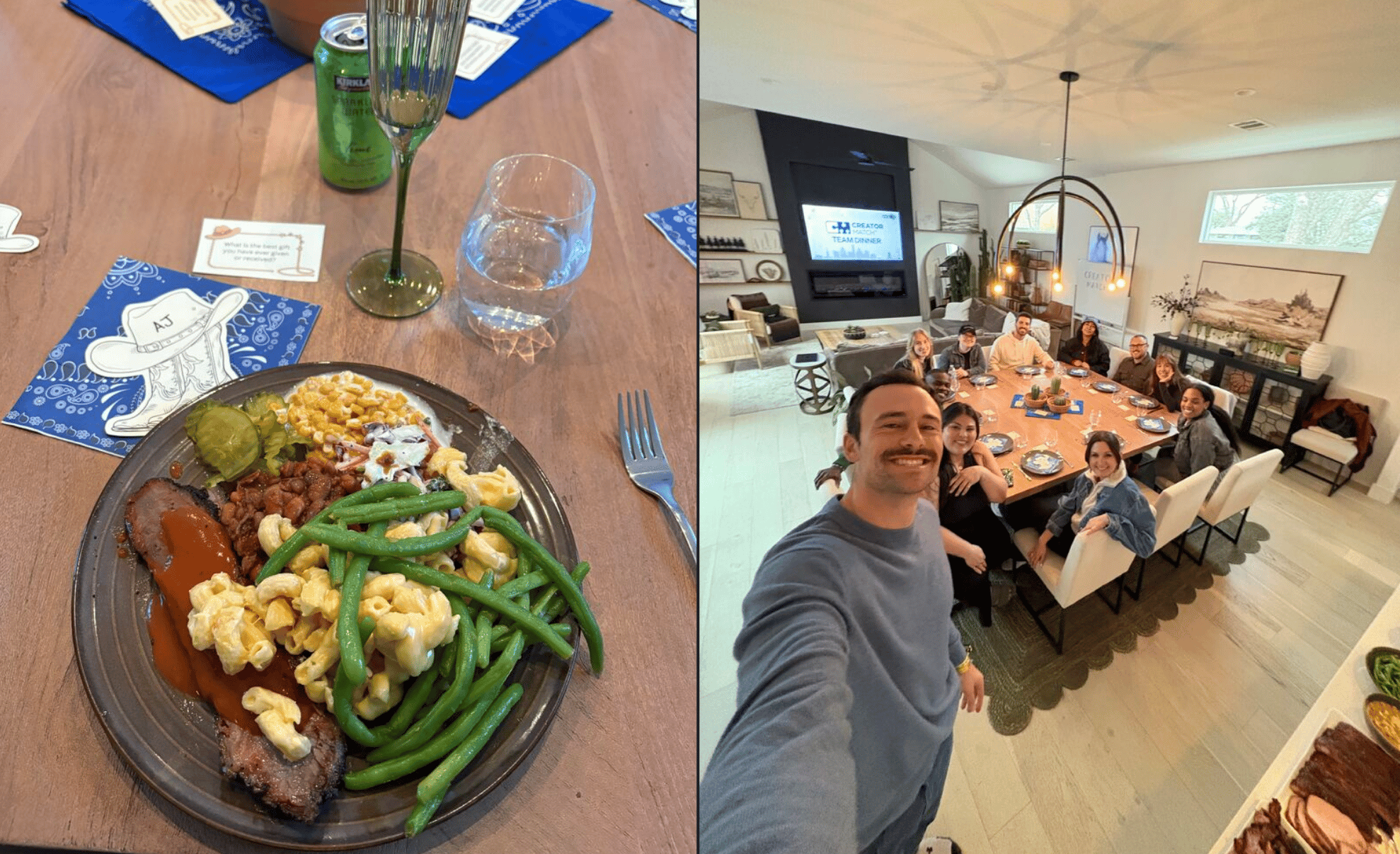
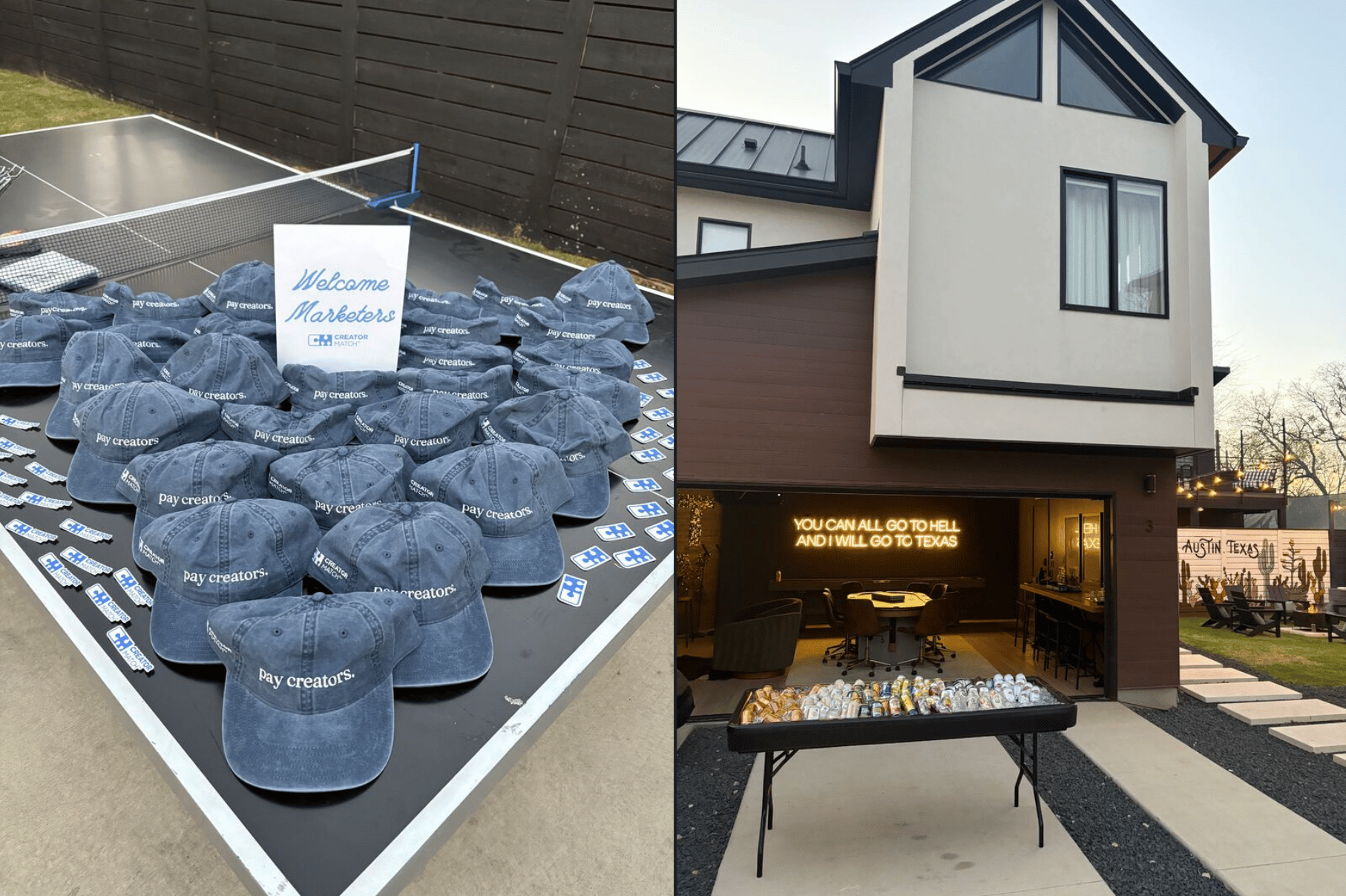
The villa slept 26. 5,000 sq ft. Two pools. Outdoor movie screen. We called it the “Creator Match Compound,” and it earned the name.
Our Itinerary was a Video Game (literally)
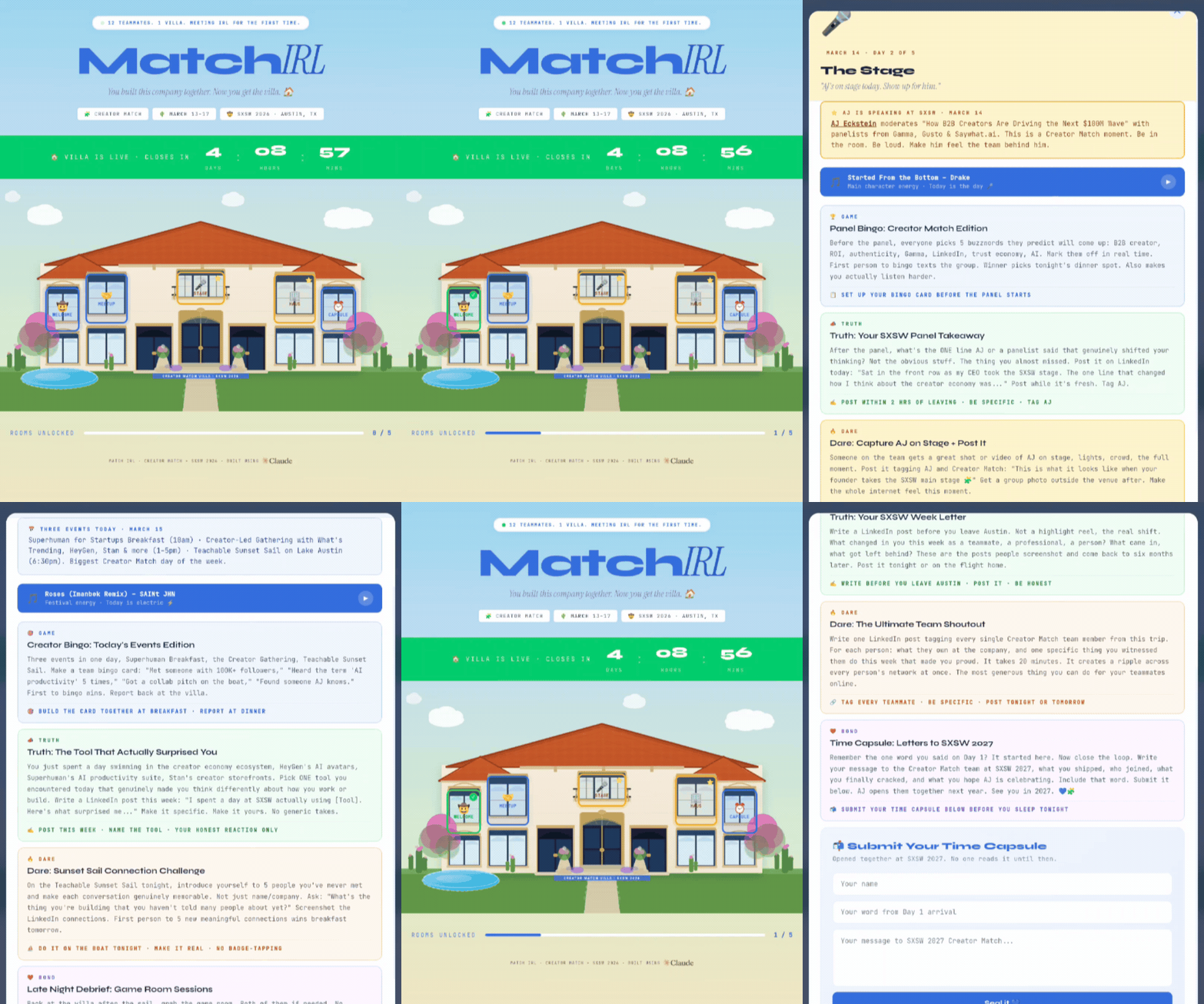
Then a Creator in Our Community Did Something Nobody Asked For
Sharon Jacob — one of the most talented and creative people I've ever met — saw we were headed to Austin and decided to build something for the team.
Just a creator who wanted to make our first offsite unforgettable.
She vibe-coded an entire interactive platform for us. All through Claude Code.
Her tagline: "You built this company together. Now you get the villa. 🏠"
This is what Creator Match actually is. Not just the team building it. Not just the brands we work with. It's community members like Sharon who make the hard days worth it.
We Didn't Plan an Itinerary. We Engineered Moments.
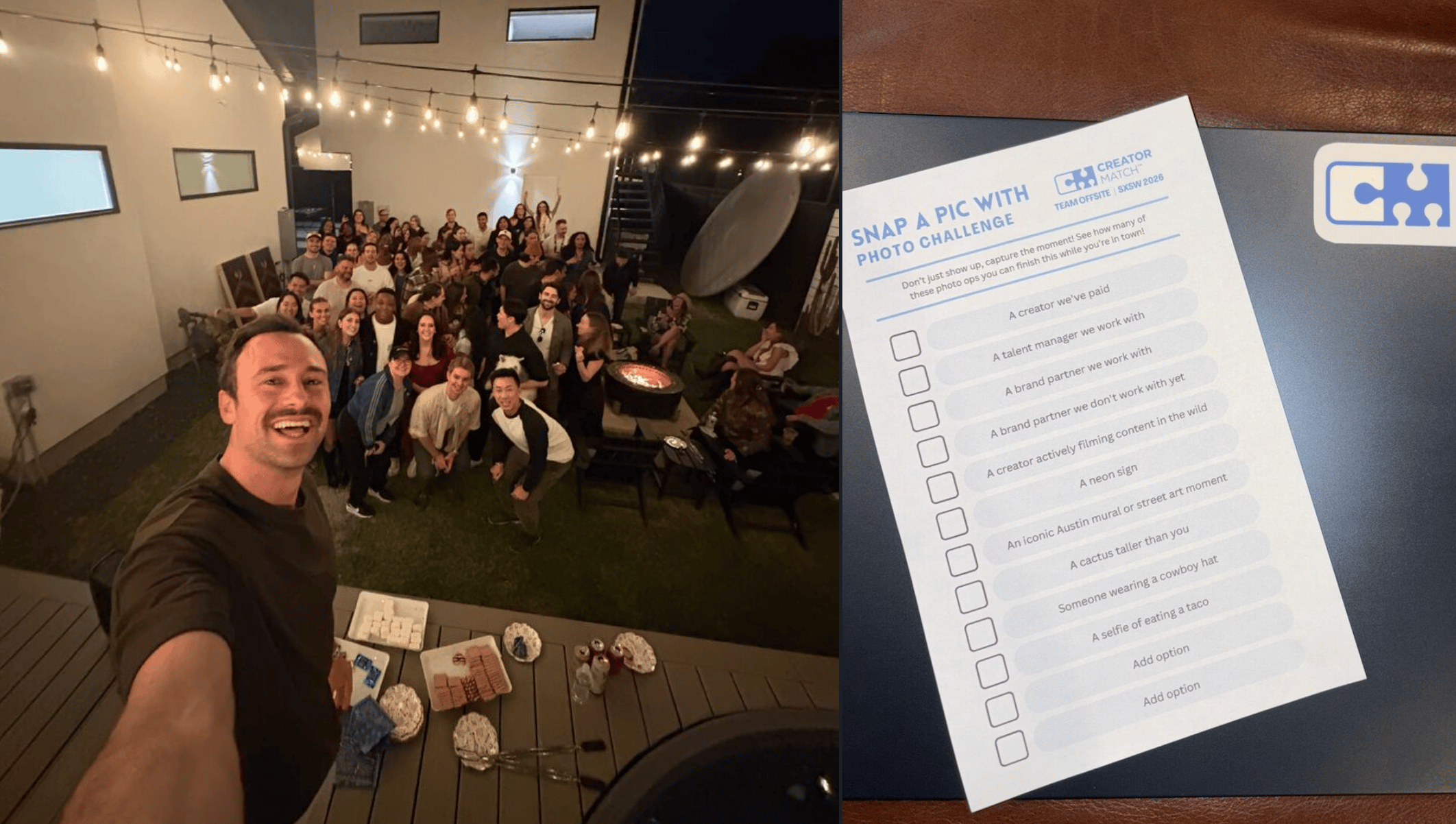
Here's the thing about memorable experiences: the best ones don't feel engineered at all.
They feel inevitable. So we designed for that.
What we built:
A Marketers S'mores Night by the fire
A Creator Party that drew the right people
Gamma Pajama Party
The Night We Found Out Who Our Team Really Is
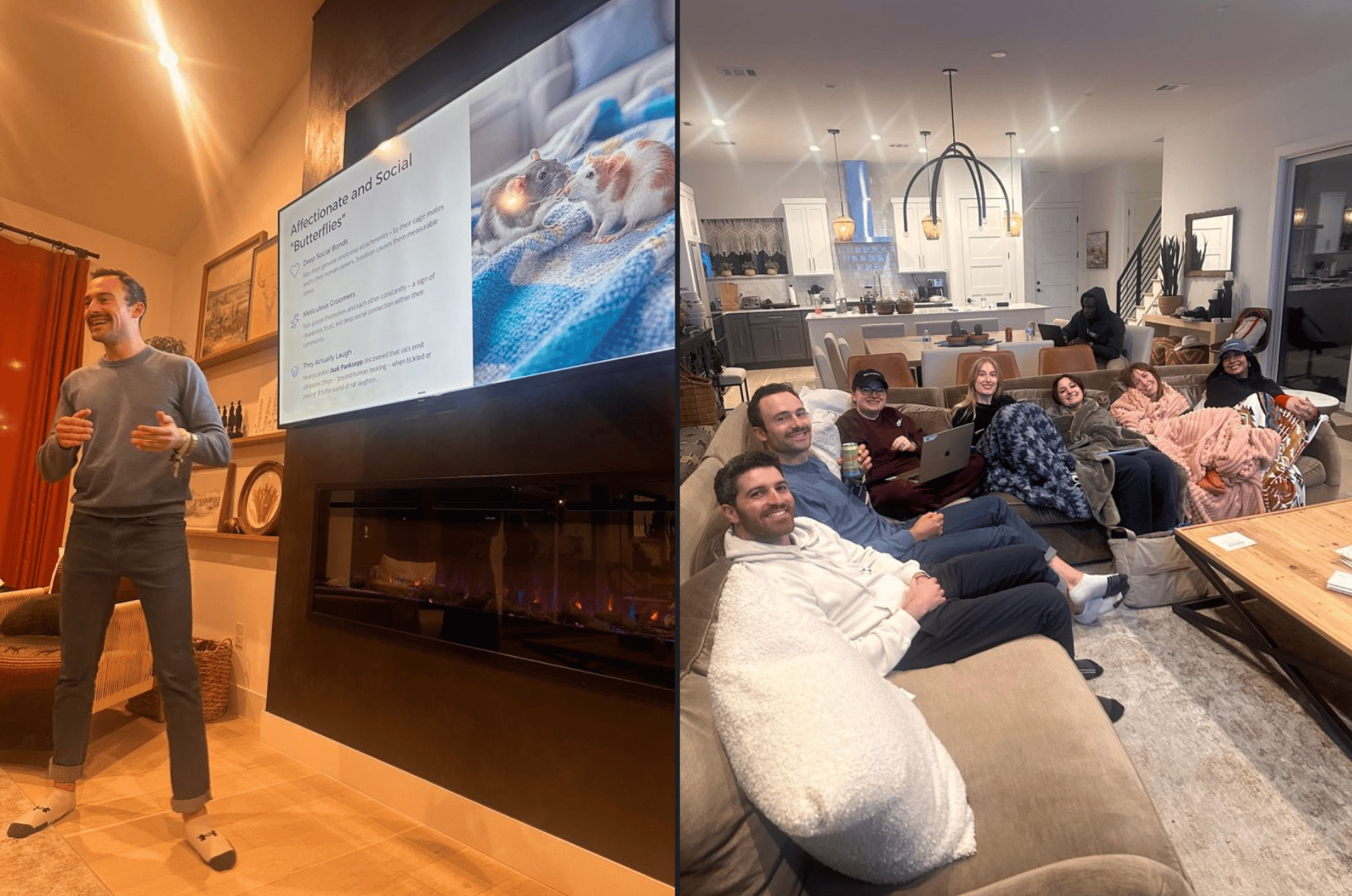
This one started as a joke. It ended up being the most revealing thing we did all week.
We called it the Gamma Pajama Party. Everyone showed up in pajamas.
One rule: convince the audience of anything.
Topics included:
Aisle seats are better than window seats
IKEA is a social experiment
Disney heroes are the TRUE villains
Memes are the highest form of communication
Argentina stole the World Cup
Paris is the creepiest city in the world
And me? My COO — who apparently thinks I'm too persuasive and funny — assigned my topic personally.
I got: "Why rats make the best pets."
I committed fully. Somewhere in the chaos, my slide got misread as "Rats got demonetized." It said demonized. I'll take it.
We built the whole thing in Gamma — one of our brand partners, and genuinely one of the best tools for making presentations feel effortless. The pajamas killed the pressure to perform. The competition made everyone actually try.
Winners walked away with Meta Ray-Bans ($400) and a DJI Osmo Pocket 3 ($500).
But here's the real takeaway:
Skill-based games reveal sides of your teammates you never see in a normal workday.
The Content Play Most Companies Miss Completely
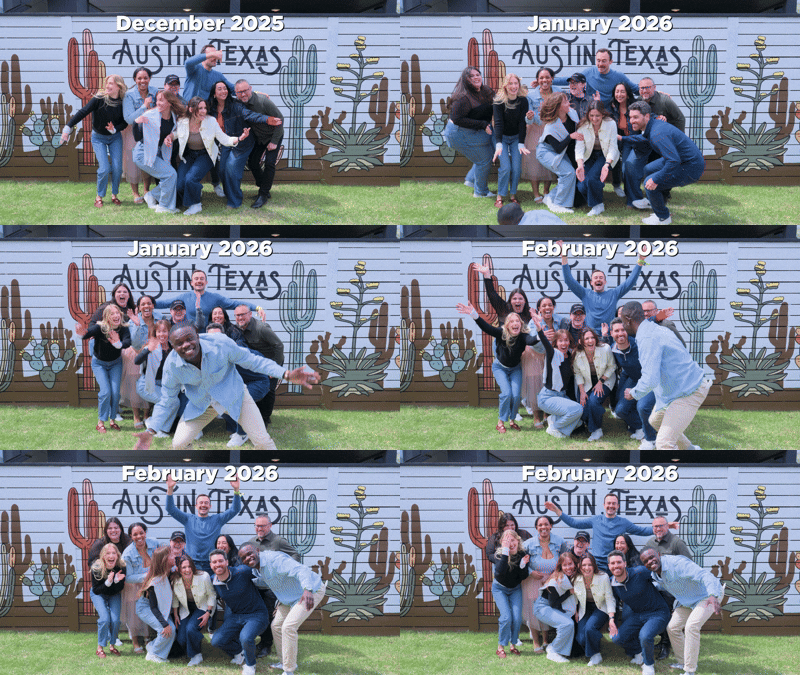
Here's where most companies leave serious ROI on the table.
They treat an offsite as a cost center. We treated it as a content engine.
Before we arrived: We teased the villa. Shared the spend publicly. Built anticipation.
While we were there: We hired a production company. Captured everything (conversations, moments, and late night ideas).
After: This newsletter. LinkedIn breakdowns. Short-form videos. Photo dumps.
One 4-day trip → weeks of content.
One experience → multiple distribution channels → ongoing brand building.
The trip didn't end when the flights landed. It's still compounding.
The Full Cost Breakdown
Most companies hide this part. We're not most companies. We build in public 😉
Here’s exactly what this offsite cost us 👇
Category | Cost |
|---|---|
Airbnb (Villa) | $10,000 |
Team Flights | $4,631 |
Airbnb Food / Drinks / Team Meals | $3,331.22 |
Event Shark Content | $3,800 |
CM Merch (Stickers / Hats) | $1,982 |
Ride Shares | $1,401.18 |
Prizes for Team | $1,252 |
CM Events Cost | $694.76 |
Gift Bags / Decorations | $403.65 |
Total Offsite Spend: $27,496
This comes out to about ~$2,500 per person.
Most companies ask: “What’s our budget?”
We asked: “What experience do we want to create?”
Then worked backwards.
The 5-Part Framework We'll Use Every Time
If you're planning an offsite and want to steal our approach:
1. Stack it with something bigger. Combine your retreat with a conference, an event, a launch. Don't fly people out for one reason when you can give them five.
2. Choose interaction density over comfort. One house beats 10 hotel rooms every time. Proximity creates trust.
3. Design moments, not meetings. People don't remember agendas. They remember the thing that happened at 1 AM when nobody was trying (like duet karaoke).
4. Build in the content layer from day one. Plan what you'll capture before you get there. The ROI extends well past the trip.
5. Optimize for energy, not efficiency. An over-scheduled offsite is just a bad week of meetings with better food. Give people room to breathe.
Was It Worth It?
Yes. 100%.
A remote team that now feels like a team. Shared references. Real trust. The kind of momentum that doesn't come from Zoom calls or Looms.
Plus, we now have years of inside jokes to laugh about on Slack.
Austin was fun. What city should we host our next team offsite?
And what was your favorite part?